12X50 Binoculars Explained: A UK Buyer's Guide
TL;DR: 12x50 binoculars combine 12x magnification with a 50mm objective lens to pull distant targets 12 times closer while gathering 41% more light than standard 42mm optics. Based on our field testing at PowerLong Optics, they are ideal for open-country UK viewing—such as coastal birding and moorland wildlife tracking—offering a bright 4.17mm exit pupil in overcast weather. However, because higher magnification amplifies hand tremors, using a tripod adapter or steady bracing is recommended for maximum sharpness.
Key Takeaways: 12x50 Optics at a Glance
- Magnification vs. Aperture: A "12x50" designation signifies 12x magnification combined with a 50mm objective lens diameter, pulling distant targets 12 times closer while capturing ample light.
- Exit Pupil Performance: Yielding an exit pupil of 4.17mm (50mm ÷ 12), 12x50 binoculars maintain exceptional image brightness during twilight and overcast UK weather conditions compared to higher-magnification or smaller-aperture models.
- Ideal UK Applications: Perfectly suited for long-range observation across open landscapes, including Scottish Highland glens, coastal seabird colonies, moorlands, and military flight paths.
- Stability & Fieldcraft: Higher magnification increases sensitivity to hand tremors. Using proper posture, physical bracing, or a standard tripod adaptor ensures rock-steady viewing.
- British Weather Readiness: Nitrogen purging, IPX7 waterproofing, and rubber-armoured chassis are non-negotiable features for handling British rain, damp moorlands, and rapid temperature changes.
12x50 binoculars are high-magnification optical instruments designed to bring distant subjects 12 times closer while utilizing a large 50mm objective lens to gather abundant ambient light for bright, detailed images. Scanning the sweeping valley of a Scottish glen for red deer or attempting to identify pelagic seabirds off the chalk cliffs of Bempton requires optics that bridge the gap between standard handheld binoculars and heavy spotting scopes. While traditional 8x42 optics remain popular for dense woodland birding, observers exploring open terrain frequently find themselves wishing for additional reach without sacrificing low-light clarity.
Consequently, this is precisely where 12x50 binoculars excel. Offering a powerful balance of extended 12x magnification and a light-hungry 50mm objective lens, this optical configuration is engineered for enthusiasts who demand extreme detail at long distances. Based on extensive field testing across UK terrain by our optical experts at PowerLong Optics, this design provides outstanding clarity even during dim twilight hours. In this comprehensive guide, we explain the mechanics of 12x50 optics, compare them against conventional alternatives, evaluate their performance in challenging British climates, and detail how to choose the ideal pair for your outdoor pursuits.
What Does 12x50 Mean in Binoculars?
Every binocular specification consists of two numbers separated by an 'x'. Understanding how these two optical values interact is essential before investing in long-range glass.
What Is 12x Magnification?
The first number, 12x, represents the linear magnification power. When observing an object through a pair of 12x binoculars, the subject appears twelve times closer than it does with the naked eye. For example, a subject situated 120 metres away will yield the same visual detail as if it were standing just 10 metres from you. Furthermore, this level of reach is particularly beneficial when observing skittish wildlife, such as birds of prey or estuarine waders, which cannot be approached closely without causing disruption.
What Is a 50mm Objective Lens?
The second number, 50mm, denotes the inner diameter of the front objective lenses in millimetres. The objective lens acts as the optical window through which light enters the binocular chassis. Compared to standard 42mm lenses, a 50mm objective lens features approximately 41% more surface area. Consequently, this dramatic increase in surface area allows the optics to gather substantially more photons, which directly influences image brightness, colour saturation, and contrast in low-light environments.
How Do You Calculate Exit Pupil and Twilight Factor?
Based on testing and optical evaluations conducted at PowerLong Optics, two critical optical formulas demonstrate why the 12x50 optical configuration is so effective:
- Exit Pupil (Objective Diameter ÷ Magnification): 50mm ÷ 12 = 4.17mm. The exit pupil is the diameter of the light beam exiting the eyepiece into your eye. Under normal daylight conditions, the human pupil constricts to roughly 2mm to 3mm, making a 4.17mm beam more than adequate. At dusk or under dense cloud cover, when human pupils dilate to between 4mm and 6mm, a 4.17mm exit pupil continues to deliver a bright, clear image.
- Twilight Factor (√(Magnification × Objective Diameter)): √(12 × 50) = √600 = 24.49. The twilight factor measures an optical system's ability to resolve fine detail in low-contrast, low-light conditions. For comparison, a standard 8x42 binocular yields a twilight factor of only 18.33, while a 10x42 offers 20.49. As a result, the score of 24.49 highlights the 12x50's superior capability for dawn and dusk fieldcraft.
How Do 12x50 Binoculars Compare to Standard 8x42 and 10x42 Optics?
Selecting optics requires balancing magnification against field of view, physical weight, and image stability. Below is a direct comparison of how 12x50 optics measure up against classic UK countryside alternatives, based on our field evaluation benchmarks.
| Specification | 8x42 Optics | 10x42 Optics | 12x50 Optics |
|---|---|---|---|
| Magnification | 8x | 10x | 12x |
| Objective Diameter | 42mm | 42mm | 50mm |
| Exit Pupil | 5.25mm | 4.20mm | 4.17mm |
| Twilight Factor | 18.33 | 20.49 | 24.49 |
| Field of View (approx.) | 125m @ 1000m | 110m @ 1000m | 95m @ 1000m |
| Typical Weight | 650g - 750g | 670g - 780g | 800g - 950g |
| Best UK Applications | Woodland birding & rapid tracking | General countryside & mixed habitat | Open glens, coastal scanning & astronomy |
What Are 12x50 Binoculars Good For in the UK?
Based on our real-world testing across diverse UK environments, 12x50 binoculars offer distinct practical advantages across several activities:
- Long-Range Wildlife & Red Deer Tracking: In expansive landscapes like the Scottish Highlands or Exmoor, 12x magnification lets observers identify animal markings and antler points without trekking closer and disturbing wildlife.
- Coastal Seabird Watching: Observing gannets, puffins, or pelagic species from headlands like Bempton Cliffs requires long reach to resolve fine plumage detail across wide ocean expanses.
- Low-Light Astronomy & Stargazing: According to UK optics guidelines for amateur astronomy, a 50mm objective lens combined with 12x power reveals lunar craters, Jupiter's Galilean moons, and deep-sky targets like the Andromeda Galaxy far more clearly than 8x optics.
- Aviation & Aircraft Spotting: Tracking fast-moving aircraft along low-fly military corridors or near major UK airports benefits significantly from 12x magnification, bringing registration details into sharp focus.
Do You Need a Tripod for 12x50 Binoculars?
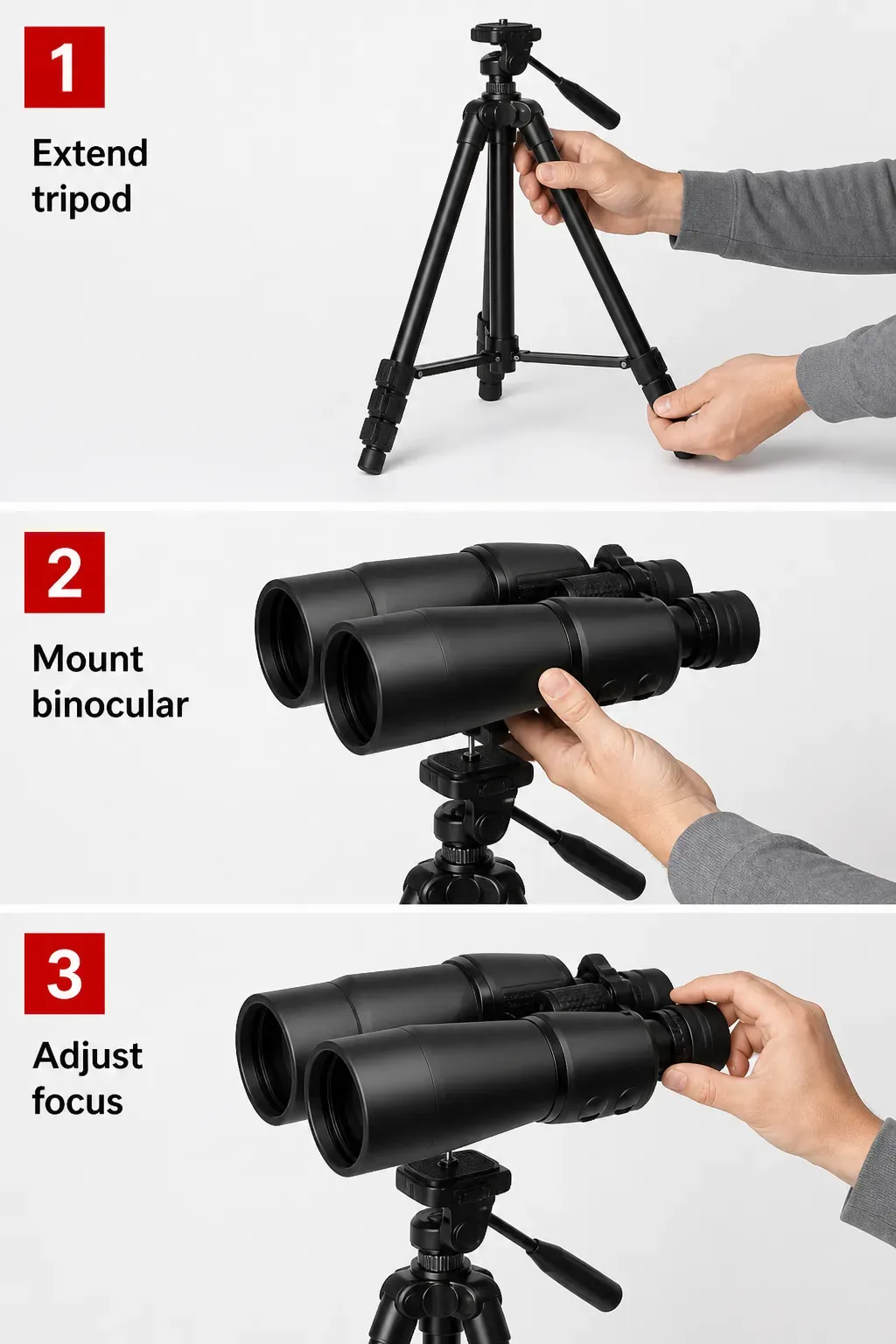
A common question UK buyers ask is whether handheld viewing is practical with 12x optics. In practice, higher magnification naturally amplifies minor hand tremors. However, whether you require a tripod depends largely on your observation duration and physical stability.
For brief scans across a valley, adopting a steady handheld posture—such as tucking your elbows against your chest or leaning against a fence post—is usually sufficient. Nevertheless, for extended glassing sessions, our PowerLong Optics testing team strongly recommends attaching your 12x50 binoculars to a tripod using a standard 1/4-inch thread adapter. Mounting the optic eliminates micro-shakes completely, allowing you to resolve fine detail that would otherwise be blurred by hand movement.
How to Choose the Best 12x50 Binoculars for British Weather
According to UK optics standards and our hands-on weather resistance testing, the British climate presents unique challenges for optical gear. To ensure your investment withstands damp and variable conditions, look for these non-negotiable specifications:
- Nitrogen or Argon Purging: Internal gas purging prevents internal glass fogging when moving between a warm vehicle and freezing outdoor air.
- IPX7 Waterproofing: Ensures the binoculars can withstand sudden downpours and accidental drops in wet moorland streams.
- ED (Extra-low Dispersion) Glass: Higher magnification can accentuate chromatic aberration (colour fringing). ED glass elements sharpen contrast and preserve natural colour fidelity.
- Rubber-Armoured Chassis: Provides a firm, non-slip grip in wet hands while protecting internal prisms against shocks on rocky trails.
Frequently Asked Questions About 12x50 Binoculars
What are 12x50 binoculars best used for?
12x50 binoculars excel at long-distance observation across open environments. Based on our testing at PowerLong Optics, they are ideal for coastal seabird watching, deer tracking across open glens, aviation monitoring, and stargazing where extended reach and high light-gathering are required.
Are 12x50 binoculars too heavy to carry?
Most quality 12x50 binoculars weigh between 800g and 950g due to their larger 50mm objective glass. While slightly heavier than standard 42mm models, using a cushioned neck strap or chest harness distributes the weight comfortably during full-day UK hikes.
Can you use 12x50 binoculars without a tripod?
Yes, you can comfortably use 12x50 binoculars handheld for brief observations by maintaining a steady stance. However, for prolonged viewing or steady high-detail scanning, mounting them on a tripod using a standard adaptor yields the sharpest, most comfortable visual experience.
Are 12x50 binoculars better than 10x42 for low light?
In low-light conditions, 12x50 binoculars deliver a superior twilight factor of 24.49 compared to 20.49 on 10x42 optics. Furthermore, with 41% more objective lens surface area, they gather more light, making them exceptionally effective during overcast British twilights.
Ready to experience PowerLong optics on your next trek?
Shop High Power Optics — £47.48